How to make a simplified automotive wiring diagram
Reduce a busy vehicle schematic to one readable circuit while keeping the protection, controls, connector references, and grounds that matter.

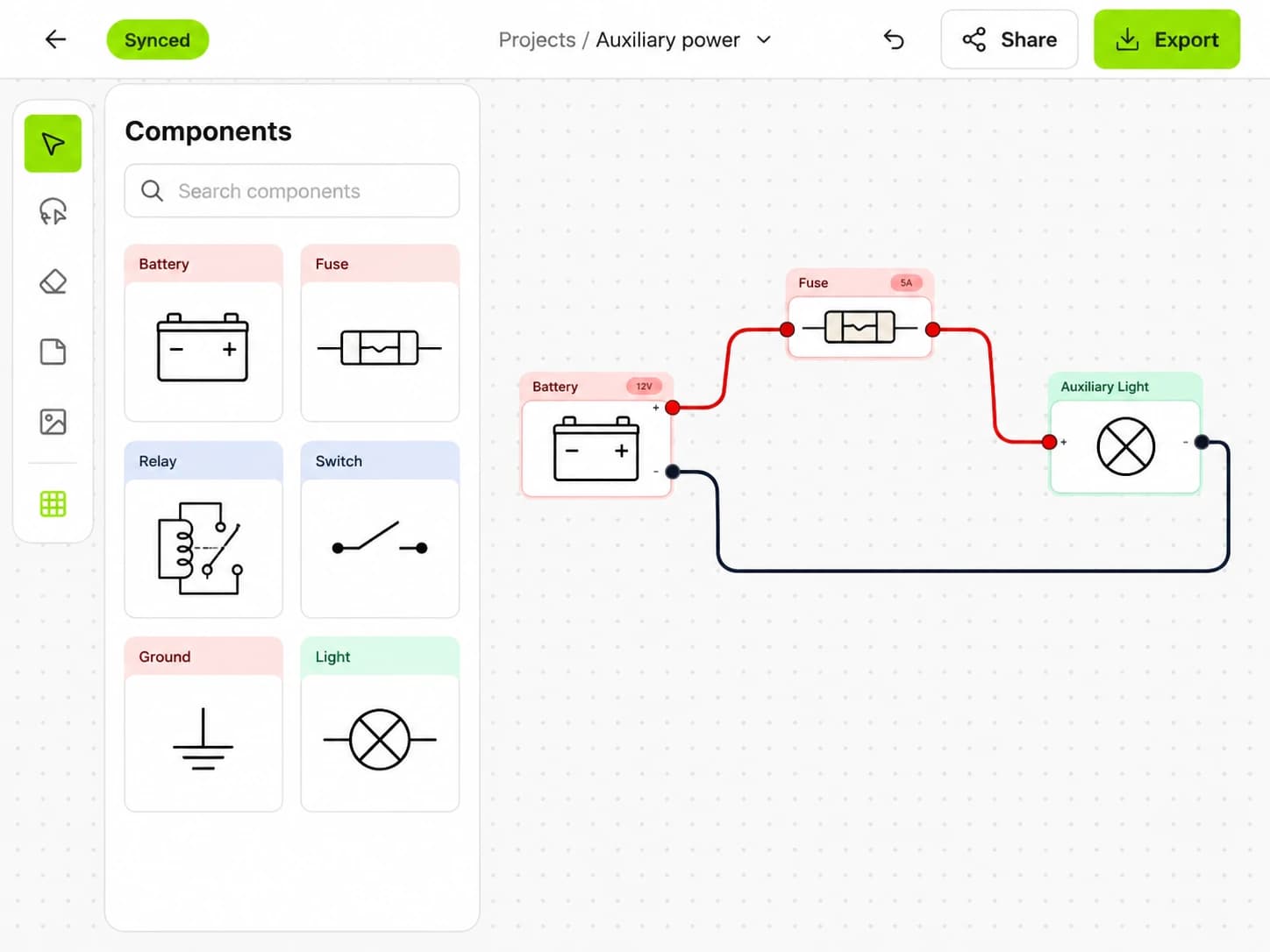
A simplified wiring diagram should remove unrelated detail, not electrical safeguards. Its job is to show one circuit clearly enough that another person can build, test or repair it without guessing.
The best starting point is a reliable source diagram, equipment instruction or design record. Simplification comes after you understand the circuit. If a wire size, fuse rating or connector pin is unknown, leave it marked for confirmation rather than filling the gap with a plausible value.
Define one question for the page
Write down what the diagram needs to answer. Examples include:
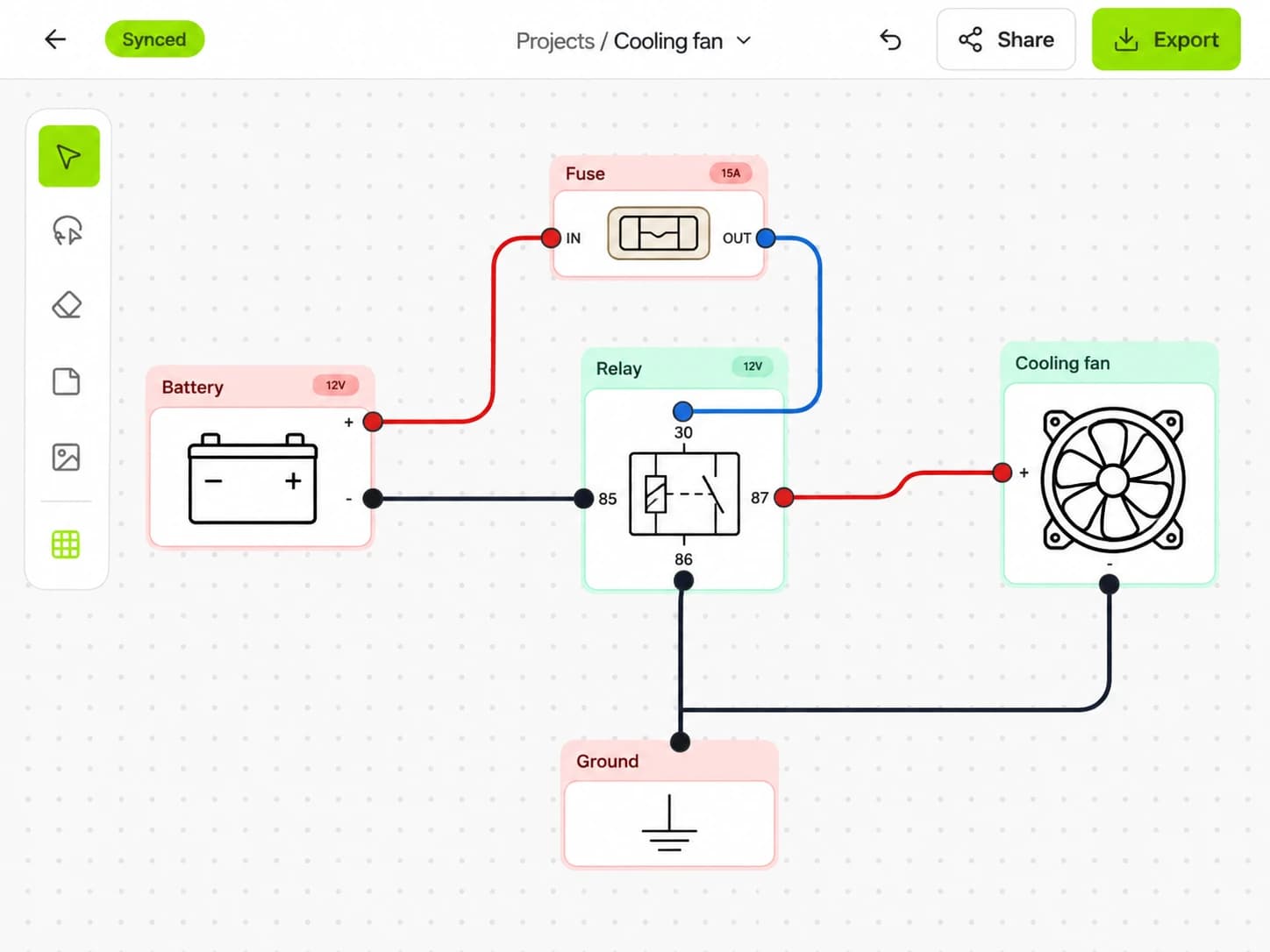
- How is the electric fan powered and controlled?
- Which fuse feeds the auxiliary lights?
- Where does the fuel pump relay get its trigger?
- Which connector carries the rear lighting circuits?
One question gives the page a boundary. Components that do not affect the answer can stay on the source schematic. Shared feeds, grounds, splices or modules that do affect it must remain.
List the circuit before drawing
Build a short inventory:
- Power source.
- Fuse or other circuit protection.
- Control device, such as a switch, relay coil or module output.
- Power-switching device, if separate from the control.
- Load.
- Ground or return path.
- Connectors and splices needed to find the circuit in the vehicle.
This list catches a common problem in simplified drawings: showing the interesting component while omitting the fuse or return path that makes the circuit complete.
Draw power and control separately
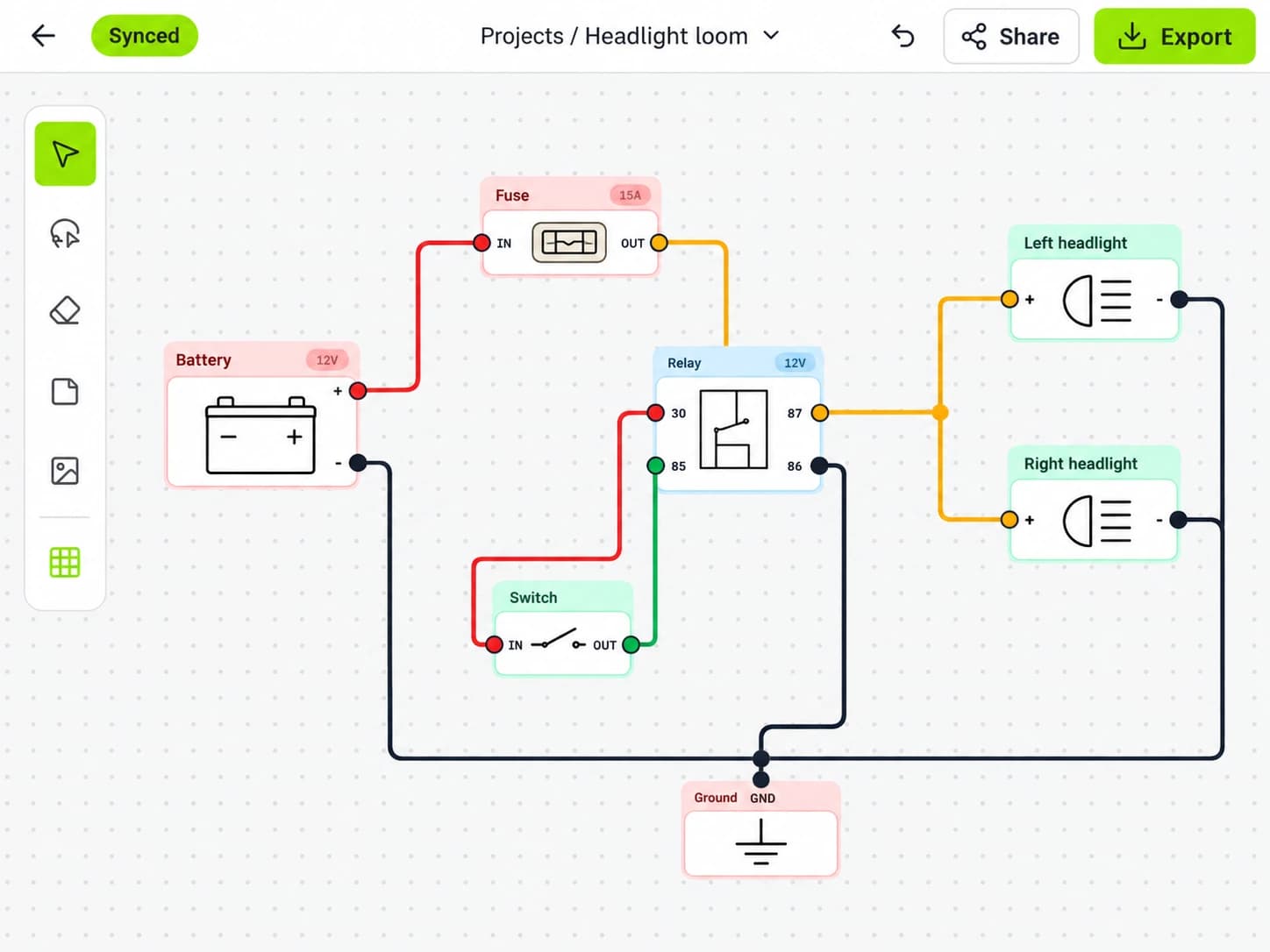
Place the main current path in a consistent reading direction, usually from the source toward the load and ground. Put the control path beside it. The two paths can meet at a relay without being drawn as one tangled line.
For a common normally open relay, the power path may run from the battery through a fuse to terminal 30, then from terminal 87 to the load. The control path energises the coil at terminals 85 and 86. HELLA's relay guide explains these common terminal roles and the 87a contact used by a change-over relay.
Confirm the markings on the actual relay. A suppression diode can make coil polarity important, and not every relay follows the same internal layout.
Keep identifiers that help at the vehicle
A clean line is not enough if nobody can find its ends. Add the details that connect the drawing to the installation:
- Component and connector names.
- Pin or cavity numbers.
- Wire identifiers and colours from the source.
- Verified conductor size.
- Specified fuse type and rating.
- Ground-point identifiers.
- Page or document references for factory circuits.
Use a short, consistent label format. Put longer explanations in notes beside the circuit rather than squeezing paragraphs onto wires.
Show boundaries honestly
Use a labelled box when a module's internal logic is outside the scope of the page. Show the relevant input and output pins, but do not draw an invented internal switch. A note such as ECU fan request output is more accurate than a guessed circuit inside the ECU.
The same rule applies to factory fuse boxes and body controllers. Name the connector, cavity and fuse when verified. If the source only shows that the circuit continues on another page, keep that reference.
Check the simplified version against the source
Trace every path twice. First follow power from the source to the return. Then start at the control input and check what changes state. Confirm that every line in the simplified page exists in the source or in the design you are adding.
Ask someone unfamiliar with the drawing to identify:
- What protects the circuit.
- What turns the load on.
- Where the main current flows.
- Where the circuit returns.
- Which connector would be tested first.
If those answers require a spoken explanation, improve the labels or layout before adding more detail.
Use layers of documentation
A simplified schematic is one view of the system. A physical harness layout answers different questions about route, branch length, clips and connector location. A connector table can carry pin-level detail without crowding the page. Keep these views linked by the same component and wire identifiers.
If you are starting from a factory schematic, first read how to trace an automotive wiring diagram, then use a consistent automotive wire-labelling system.
X/D Loom provides an automotive component canvas for the simplified circuit, with labelled wires and export to PNG or PDF. Start with one page per system when that keeps the drawing readable. Combine pages only when shared power or control relationships are easier to understand together.
Before building from the diagram, confirm all protection, conductor and terminal choices against the relevant equipment and vehicle information. A simpler page should make verified facts easier to see. It should never make an unverified assumption look certain.
Put it into practice.
Plan your next circuit in X/D Loom. Add components, connect the wires, and keep your build easy to follow.
Free to start. No credit card required.