How to size a fuse for a 12V automotive circuit
A practical fuse-sizing process for project cars, without relying on a universal wire table or a fixed percentage rule.
A fuse is there to interrupt a fault before the protected wiring is damaged. That makes fuse selection a wiring decision as much as a load decision. The number printed on the accessory is only one part of the job.
There is no single fuse chart that is safe for every 12V vehicle circuit. Wire material, insulation, length, bundling, ambient temperature, terminals, fuse holder, startup current and the accessory manufacturer's instructions can all affect the answer. A fixed multiplier, including 125%, should not be treated as a universal automotive rule.
Start with the equipment instructions
Check the installation manual or label supplied with the load. If the manufacturer specifies a fuse type and rating, begin there. Also check the vehicle workshop manual before adding a circuit to an existing feed. An unused fuse-box position is not automatically suitable for a new load.
If the load is described only in watts, dividing watts by voltage gives a rough current estimate. A 120 W load at 12 V works out to 10 A on paper. That estimate does not show motor startup current, lamp inrush, compressor cycling or the effect of the vehicle's actual operating voltage. Use it to understand the circuit, not to pick a fuse without further checks.
Check the whole protected path
Write down every current-carrying part between the source and the load:
- The supply point or battery connection.
- The fuse and fuse holder.
- The positive conductor, including connectors and splices.
- The load.
- The return path or ground connection.
The fuse must not exceed what the protected path can safely carry under the installation conditions. The smallest conductor or least capable connection in that path matters. A large cable does not compensate for a small terminal, weak holder or short section of lighter wire.
Choose the conductor using the applicable vehicle or equipment guidance. Account for cable length, voltage drop, insulation temperature, engine-bay heat, bundling and termination quality. Avoid copying a wire-size table without knowing the standard and assumptions behind it.
Allow for normal operating behaviour
Measure or obtain the normal current and any startup current. Motors, pumps, fans, incandescent lamps and capacitive electronics can draw more current briefly when switched on. A fuse that opens during normal startup is not necessarily too small, and fitting a larger fuse without checking the wire is not a sound fix.
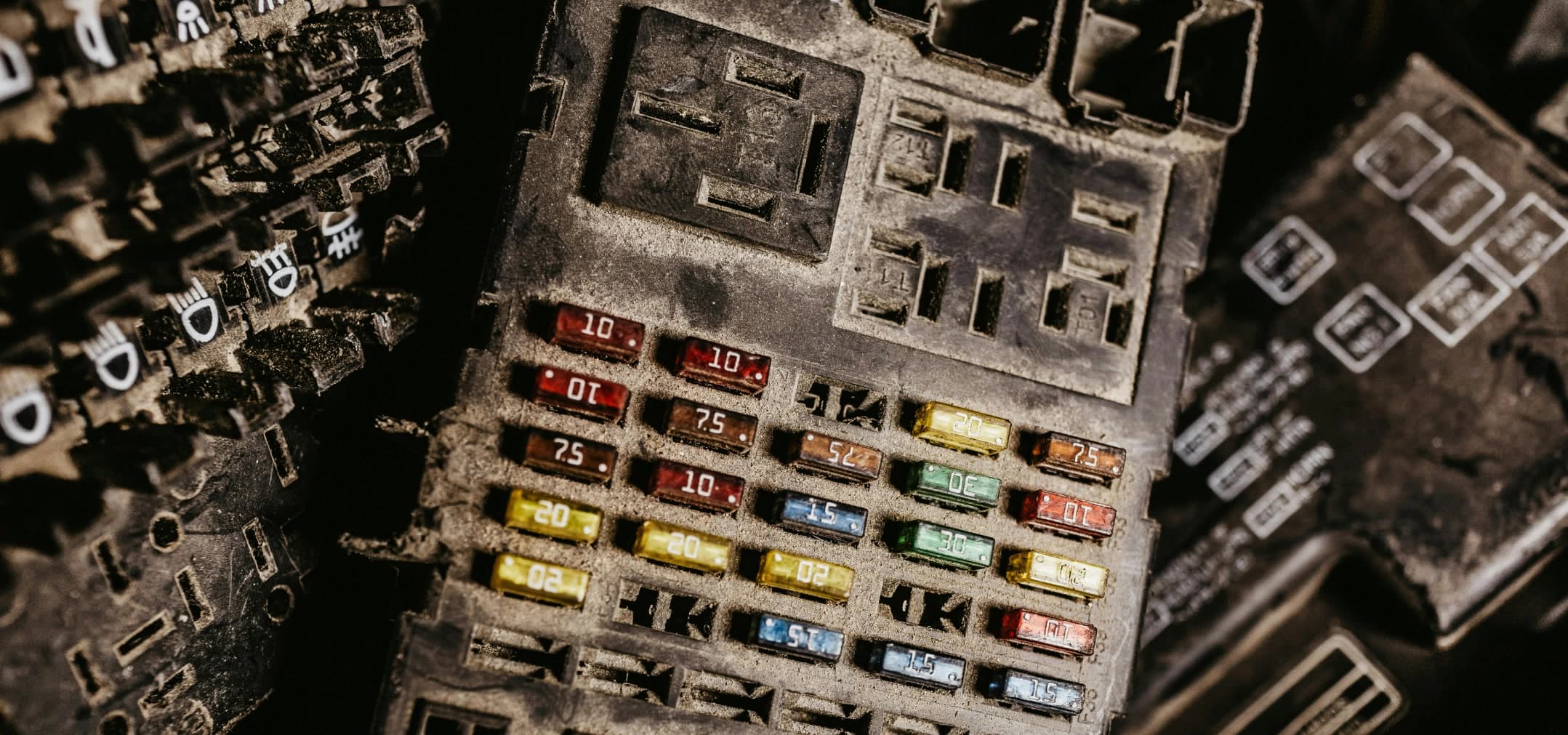
Fuse families have different time-current behaviour, voltage ratings, package sizes and interrupting ratings. The Littelfuse automotive catalog shows why two fuses with the same current marking are not interchangeable in every application. Match the specified fuse family and confirm that the holder is designed for it.
Put protection near the source
Place the fuse so that as little of the positive conductor as practical remains unprotected between the source and the fuse. Route the cable away from sharp edges, exhaust heat and moving parts. Use a covered holder with terminals suited to the cable and expected environment.
For a branch circuit, document both the upstream protection and the branch fuse. The upstream device protects the feeder; each branch fuse protects its own downstream wiring. Do not assume one large fuse at the battery is enough for every smaller branch.
Replace a blown fuse safely
A replacement fuse should have the specified amperage rating and the correct physical type. Ford warns that using a higher-amperage fuse can damage wiring and start a fire in its owner manual guidance. Toyota likewise says not to install a higher-rated fuse or substitute wire in its fuse replacement instructions.
If the correct replacement opens again, stop replacing fuses and find the fault. Look for damaged insulation, a pinched cable, water in a connector, a seized motor or an overloaded branch. Follow the vehicle manual, and use a qualified auto electrician when the circuit involves airbags, high-voltage systems or unfamiliar factory wiring.
For the wider distribution context, see how to identify and document a car fuse box.
Record the decision
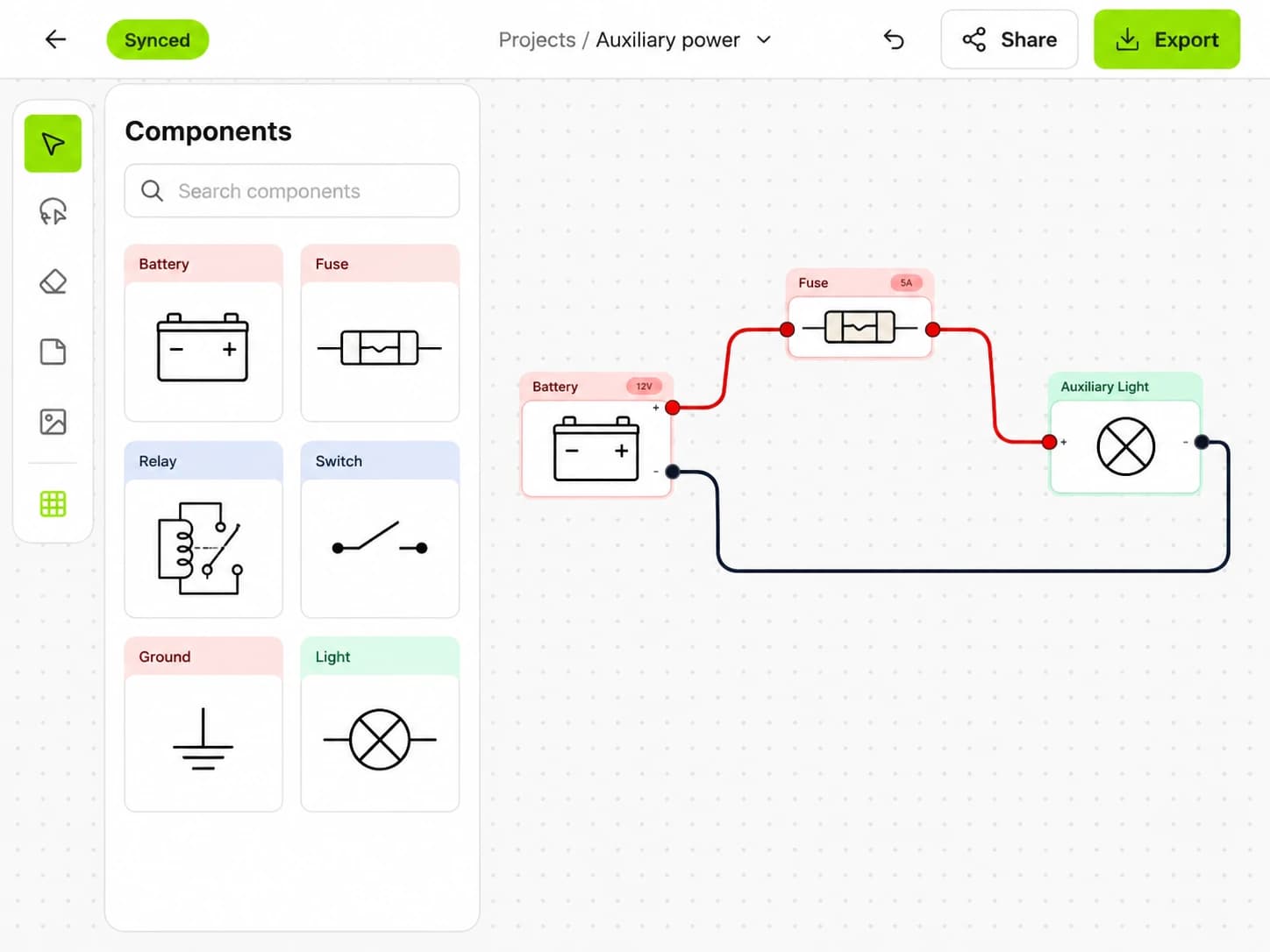
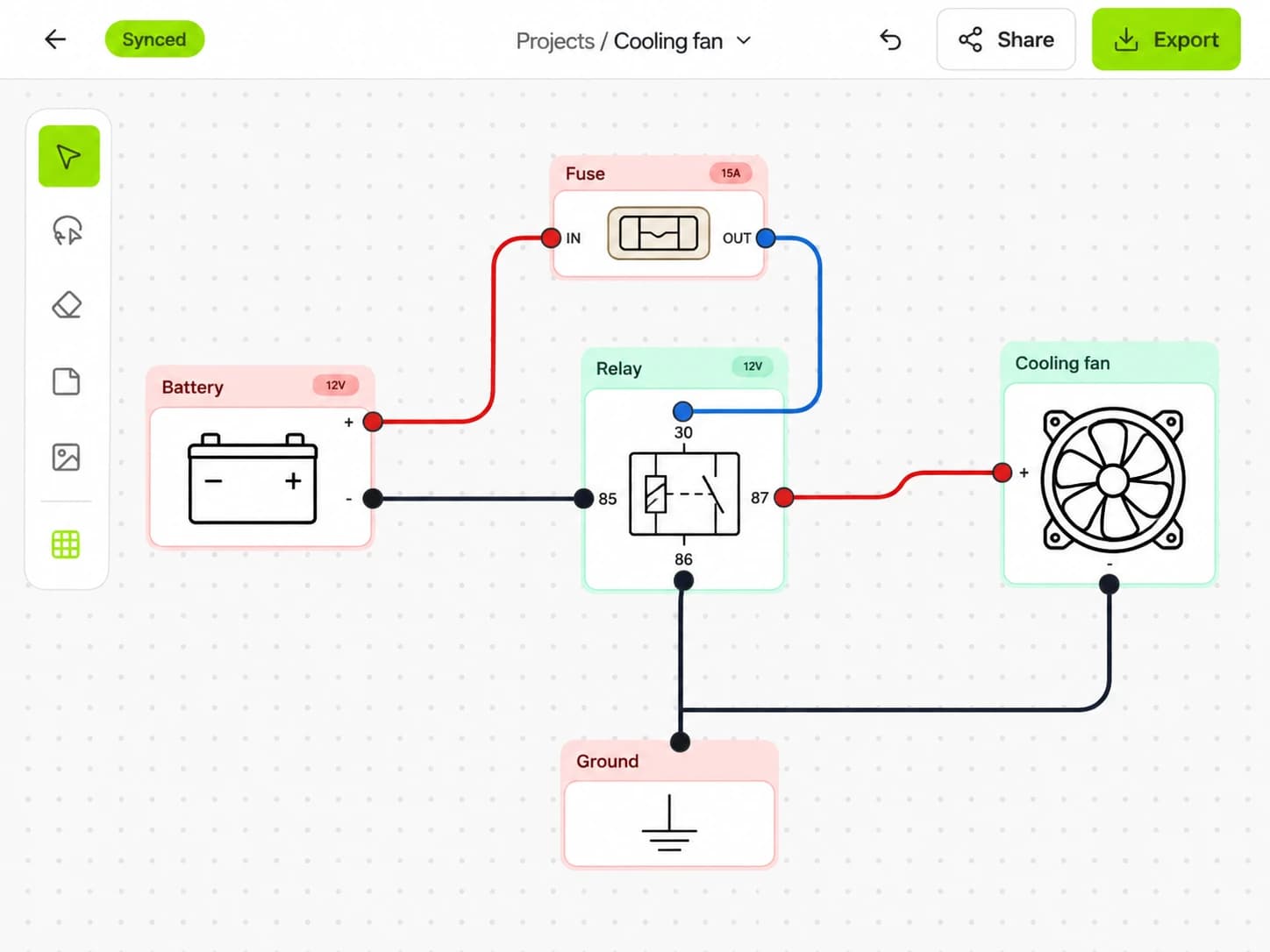
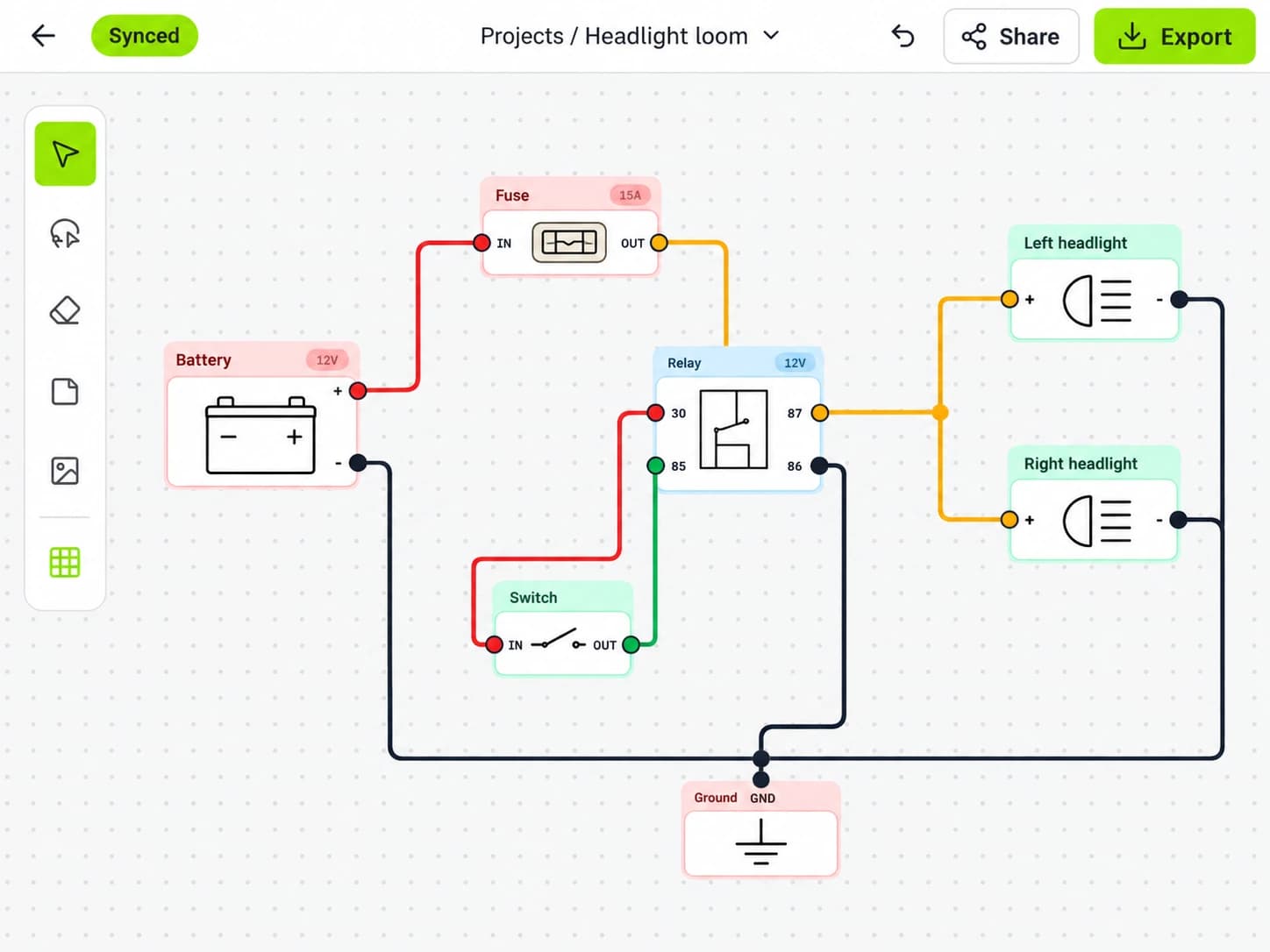
Add the fuse type, specified rating, wire details, source and load to the wiring diagram. Note the document or equipment instruction used for the choice. X/D Loom can keep those details beside the circuit so a later repair does not depend on memory.
Before powering the circuit, check the polarity, terminations, cable routing and ground path. Then test it through its normal operating states while watching for unexpected voltage drop, heat or repeated fuse operation. A calculation starts the process; inspection and validation finish it.
Put it into practice.
Plan your next circuit in X/D Loom. Add components, connect the wires, and keep your build easy to follow.
Free to start. No credit card required.