Fuse Box of a Car: Your Complete Guide for 2026.

Every car owner will eventually face an electrical issue, and nine times out of ten, it traces back to the fuse box of a car. Whether it's a dead radio, non-functioning power windows, or headlights that won't turn on, understanding this critical component can save you time and money. Think of your car's fuse box as the electrical safety guard that stands between normal operation and potential wiring fires. It's not the most glamorous part of automotive maintenance, but it's definitely one you'll want to understand before you're stranded with a dead accessory or worse.
What Exactly Is a Fuse Box of a Car?
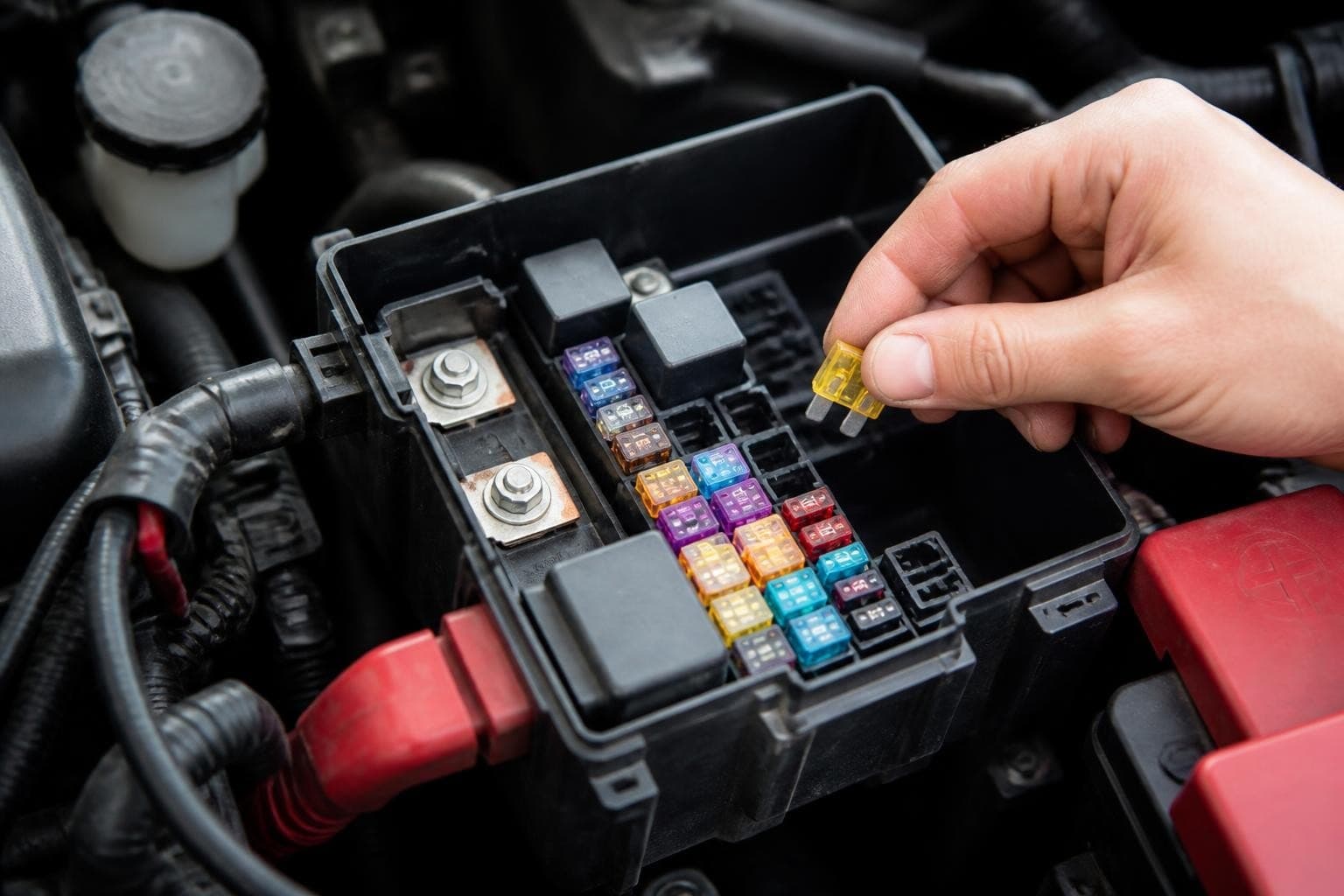
The fuse box of a car serves as the central hub for all your vehicle's electrical circuits. It houses multiple fuses that protect individual electrical components from power surges and short circuits.
When too much current flows through a circuit, the fuse "blows" by melting its internal wire, which breaks the connection and prevents damage to expensive electrical components or potential fires. It's basically a sacrificial component that takes the hit so your stereo, ECU, or other electronics don't have to.
How Fuses Protect Your Vehicle
Modern cars are packed with electrical systems. From your engine control unit to your heated seats, everything relies on stable electrical current. Without fuses, a simple short circuit could fry your entire electrical system.
Here's what fuses protect:
- Engine management systems
- Lighting circuits (headlights, taillights, interior lights)
- Entertainment systems
- Power windows and locks
- Climate control systems
- Safety features like airbags and ABS
The beauty of this system is its simplicity. A blown fuse is cheap and easy to replace, while a fried computer module could cost hundreds or thousands of dollars.

Finding Your Car's Fuse Box Location
Most vehicles have at least two fuse boxes, sometimes three. The locations vary by manufacturer, but there are common spots you'll want to check.
Primary Fuse Box Locations
Under the dashboard: The most common location is on the driver's side, tucked up under the dash near the steering column. You'll often need to get down on your knees and look up to spot it.
Under the hood: The engine compartment fuse box usually sits near the battery or along the firewall. This box typically handles higher-amperage circuits like the starter, alternator, and cooling fans.
In the trunk or cargo area: Some luxury vehicles and SUVs have a third fuse box in the rear, often hidden under a panel or carpet.
If you're struggling to locate your fuse boxes, check out this comprehensive fuse box location guide that covers various makes and models with helpful diagrams.
Location | Typical Circuits | Access Difficulty |
|---|---|---|
Under Dashboard | Interior lights, radio, power accessories | Easy |
Under Hood | Engine systems, headlights, cooling fans | Moderate |
Trunk/Cargo Area | Rear lighting, entertainment systems | Easy |
Understanding Fuse Types and Ratings
Not all fuses are created equal. The fuse box of a car contains different types designed for specific amperage ratings and applications.
Common Fuse Types You'll Encounter
Blade fuses are the most common in modern vehicles. They come in several sizes: mini, standard, and maxi. The color coding tells you the amperage rating at a glance.
Cartridge fuses are cylindrical and typically used for higher-amperage circuits. You'll find these less commonly in newer cars but they're still around in some applications.
- Yellow: 20 amps
- Clear/White: 25 amps
- Green: 30 amps
- Red: 10 amps
- Blue: 15 amps
- Tan: 5 amps
The amperage rating is crucial. Never replace a fuse with a higher rating than specified, even if the lower-rated fuse keeps blowing. That fuse is trying to tell you something's wrong with the circuit.
Reading Your Fuse Box Diagram
Every fuse box of a car comes with a diagram, either on the inside of the cover or in your owner's manual. This diagram is your roadmap to troubleshooting electrical issues.
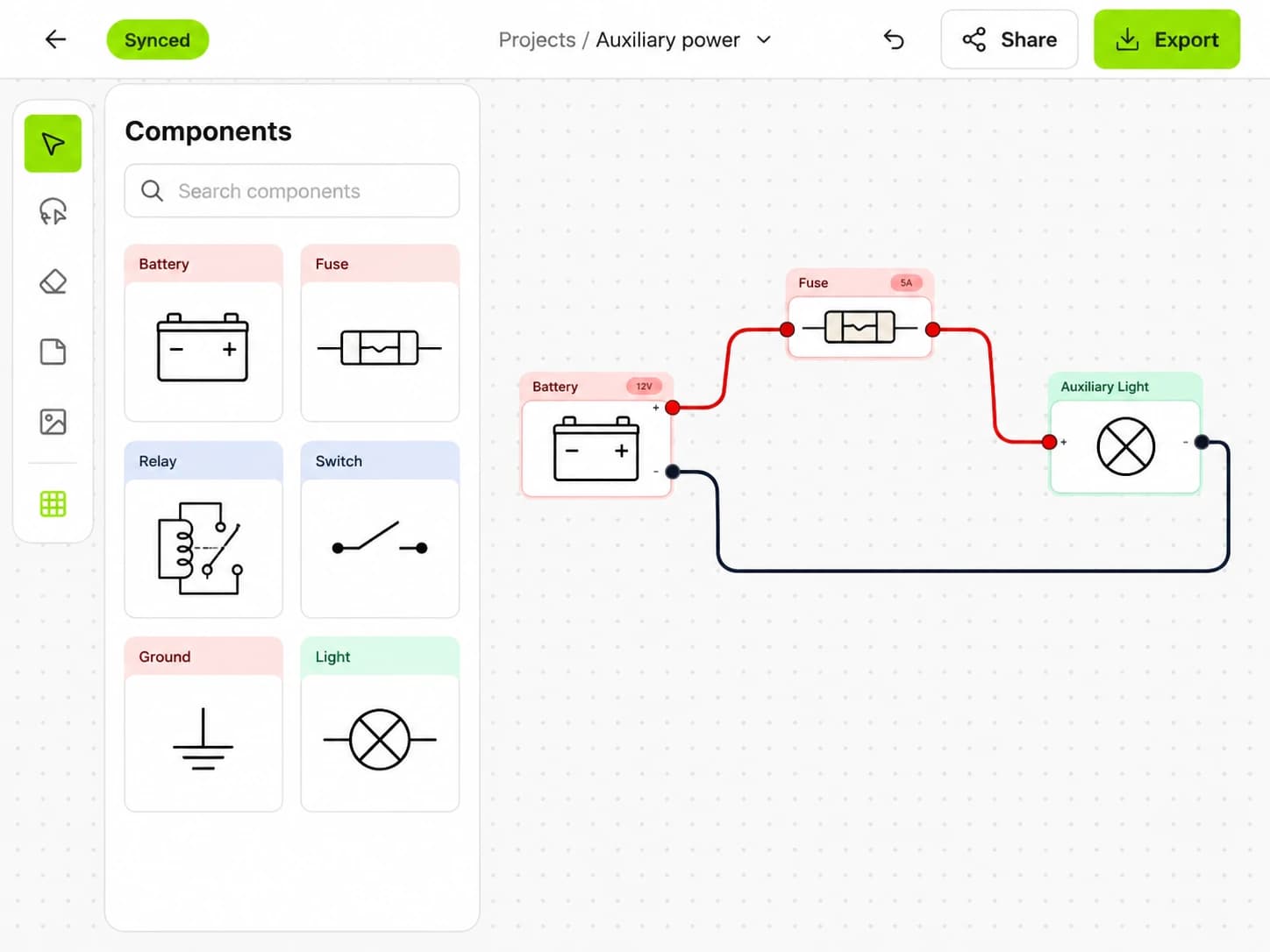
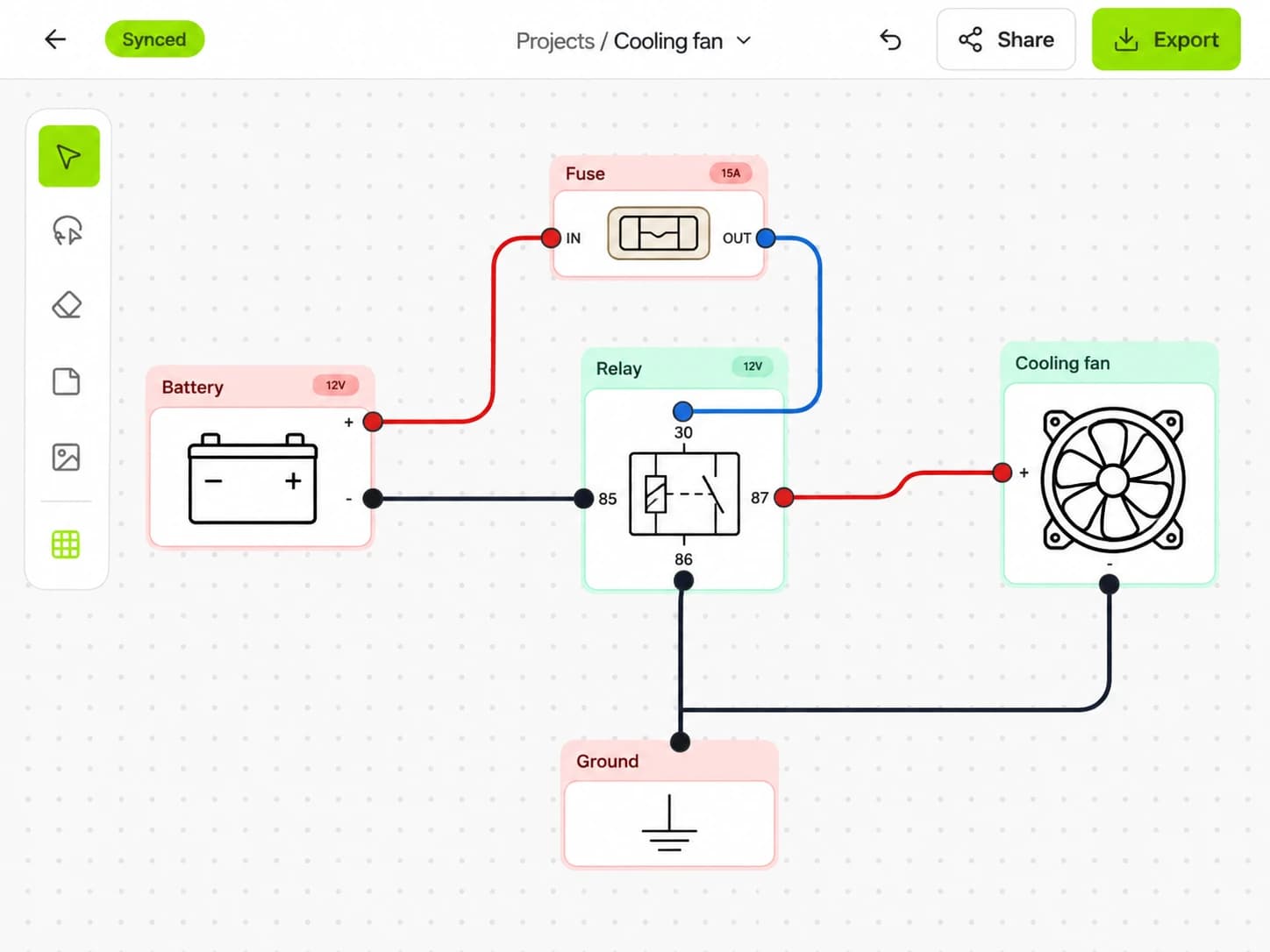
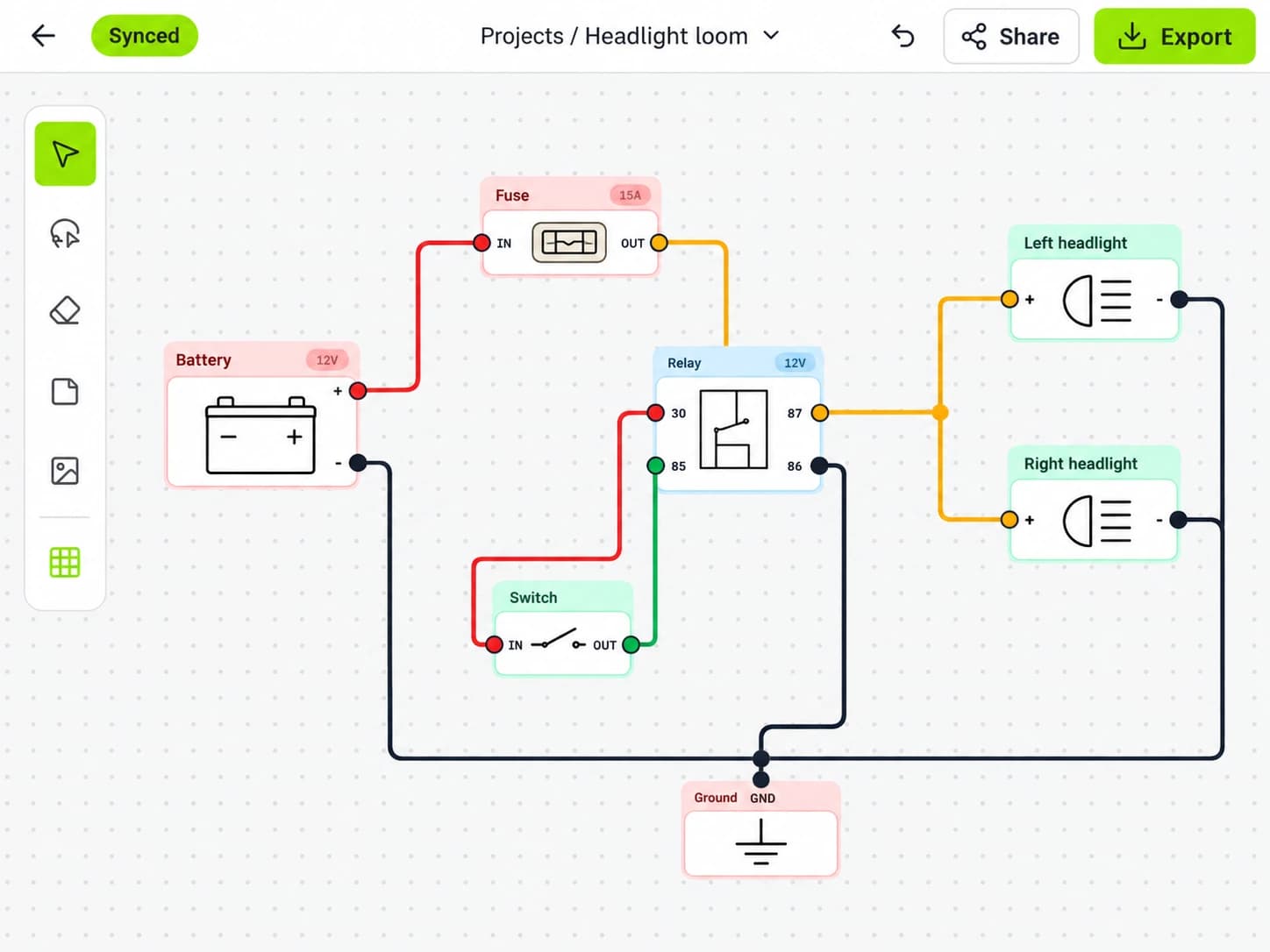
The diagram shows which fuse controls which circuit, along with the proper amperage rating. Some diagrams use symbols, while others spell everything out in plain English. Learning to read these diagrams is essential for anyone who works with automotive electrical systems, which is why tools like X/D Loom make creating and understanding wiring diagrams so much easier for professionals and DIYers alike.
Common Problems with Car Fuse Boxes
Even though fuses are simple components, several issues can crop up with your vehicle's fuse box over time.
Blown Fuses and Their Causes
A blown fuse is the most obvious problem. You'll know it when you look at it because the metal strip inside will be visibly broken or melted. Identifying a blown car fuse is straightforward once you know what to look for.
Common reasons fuses blow:
- Short circuits in the wiring
- Overloaded circuits (too many accessories on one circuit)
- Faulty components drawing excessive current
- Water intrusion causing corrosion
- Age-related deterioration
If a fuse blows repeatedly after replacement, you've got a deeper problem that needs diagnosis. Don't keep replacing it and hoping for the best.

Corrosion and Connection Issues
The fuse box of a car isn't immune to corrosion, especially in humid climates or if water has leaked into the cabin or engine bay. Corroded fuse terminals create resistance, which can cause intermittent electrical problems that are incredibly frustrating to diagnose.
You might notice flickering lights, accessories that work sometimes but not others, or components that seem to have a mind of their own. That's often corrosion at work.
Physical Damage to the Fuse Box
Accidents, improper modifications, or just age can crack or damage the fuse box housing. Broken tabs that hold fuses in place, melted plastic from overheating, or loose connections all fall into this category.
For detailed troubleshooting of these issues, this guide on problems with car fuse boxes offers practical solutions you can implement.
How to Check and Replace Fuses
Checking fuses is one of the easiest maintenance tasks you can perform. You don't need special tools or expertise, just a few minutes and good lighting.
The Simple Testing Process
Step 1: Turn off your vehicle completely and remove the key from the ignition. Safety first.
Step 2: Locate the fuse box and remove the cover. Keep the cover handy because you'll need to reference the diagram.
Step 3: Identify which fuse controls the problematic circuit using the diagram.
Step 4: Pull the fuse using the fuse puller tool (usually clipped inside the fuse box) or needle-nose pliers.
Step 5: Hold the fuse up to light and inspect the metal strip inside. If it's broken or the fuse appears cloudy or discolored, it's blown.
For a more thorough explanation of this process, How a Car Works provides excellent visual guides.
Replacing a Blown Fuse
Once you've identified a blown fuse, replacement is straightforward. Make sure you're using the exact same amperage rating. The spare fuses often stored in the fuse box can be lifesavers in a pinch.
Push the new fuse firmly into place until it seats properly. The fuse should sit flush with the others around it. Test the circuit to make sure everything works, and you're done.
Step | Action | Pro Tip |
|---|---|---|
1 | Turn off vehicle | Remove key completely |
2 | Locate correct fuse | Use diagram on fuse box cover |
3 | Remove suspect fuse | Use fuse puller tool |
4 | Inspect fuse | Hold up to light source |
5 | Replace if blown | Match amperage exactly |
6 | Test circuit | Verify proper operation |
When to Replace the Entire Fuse Box
Sometimes the fuse box of a car itself needs replacement, not just individual fuses. This is a bigger job but still manageable for someone with basic mechanical skills.
Signs You Need a New Fuse Box
Repeated electrical problems across multiple circuits, visible damage to the fuse box housing, or extensive corrosion that cleaning can't fix are all indicators. Melted plastic around fuse terminals is a serious red flag that shouldn't be ignored.
If you're experiencing weird electrical gremlins that don't make sense, like multiple unrelated systems failing, the fuse box might be the culprit. Water damage from leaks is another common reason for complete fuse box replacement.
DIY Fuse Box Replacement
Replacing a fuse box requires disconnecting the battery, removing all fuses, unbolting the old box, and installing a new one. It's time-consuming but not necessarily difficult.
This DIY guide on replacing a car fuse box walks through the entire process with safety precautions and necessary tools. The key is taking your time, labeling everything before you disconnect it, and having a clear wiring diagram to reference.
Speaking of wiring diagrams, documenting your work is crucial. Professional tools for creating wiring diagrams can help you map out complex electrical systems before you start tearing things apart, which can save hours of frustration during reassembly.
Creating Documentation for Fuse Box Modifications
If you're adding aftermarket accessories or modifying your vehicle's electrical system, proper documentation is essential. The fuse box of a car becomes even more critical when you're running additional circuits.
Why Wiring Diagrams Matter
Custom audio systems, lighting upgrades, winches, auxiliary batteries, or any other electrical additions need to be properly fused and documented. Years from now, you (or the next owner) will need to understand what you did and why.
Key information to document:
- Which fuse protects which circuit
- Wire gauge and routing paths
- Amperage requirements
- Connection points and grounds
- Any relays or switches in the circuit
Creating professional documentation doesn't have to be complicated. Modern tools make it straightforward to design clean, clear diagrams that anyone can follow.
Tools for Professional-Quality Diagrams
Whether you're a professional installer, a shop owner, or a serious DIY enthusiast, having the right tools for documentation makes all the difference. X/D Loom's features include comprehensive component libraries specifically designed for automotive electrical systems, making it easy to create accurate diagrams that include every fuse, relay, and connection.
The ability to work on diagrams from both web and iPad means you can document your work right in the garage, snapping photos and updating diagrams in real-time as you build your system. This is especially valuable when you're deep into a project and don't want to lose track of what goes where.
Advanced Fuse Box Troubleshooting
Once you're comfortable with basic fuse checking, there are more advanced diagnostic techniques worth learning.
Using a Multimeter for Circuit Testing
A multimeter lets you test for voltage, continuity, and resistance. This is invaluable when you're dealing with intermittent problems or trying to track down shorts in the wiring.
You can test whether power is reaching the fuse, whether the fuse itself has continuity, and whether voltage is making it through to the component. This systematic approach eliminates guesswork and gets you to the root cause faster.
Tracing Wiring from the Fuse Box
Sometimes the problem isn't the fuse itself but the wiring between the fuse box of a car and the component. Wires can chafe through insulation, get pinched, or corrode at connection points.
Following the circuit from the fuse box through the wiring harness requires patience and often a good wiring diagram. For complex vehicles or custom installations, having access to interactive fuse box diagrams can speed up the diagnostic process significantly.
Systematic troubleshooting steps:
- Verify the fuse is good and has proper voltage
- Check the ground connection at the component
- Test for voltage at the component itself
- Inspect wiring along the route for damage
- Check all connectors for corrosion or looseness
- Test the component independently if possible
Preventive Maintenance for Your Fuse Box
A little preventive maintenance goes a long way toward avoiding electrical problems down the road.
Regular Inspection Schedule
Make it a habit to visually inspect your fuse boxes annually. Look for signs of corrosion, loose fuses, or any discoloration around terminals that might indicate overheating.
Keep spare fuses of common ratings in your glove box. They're cheap insurance against being stranded with a blown fuse. Most auto parts stores sell assorted fuse kits for just a few dollars.
Protecting Against Moisture
Moisture is the enemy of electrical systems. Make sure fuse box covers are properly seated and weatherstripping is intact. If you notice water intrusion, find and fix the source immediately.
For engine bay fuse boxes, check that drain holes aren't clogged. These boxes are designed to shed water, but only if the drainage system works properly.
Smart Modification Practices
When adding accessories, avoid the temptation to tap into existing circuits unless you're absolutely certain they can handle the additional load. Running a new circuit with proper fusing is always the better choice.
Label any modifications you make. Use a label maker or permanent marker to note what each added fuse controls. Your future self will thank you, and so will anyone else who needs to work on your vehicle's electrical system.
Understanding the fuse box of a car transforms you from helpless to empowered when electrical issues arise. Whether you're replacing a simple blown fuse or documenting complex custom installations, having the knowledge and right tools makes all the difference. For those serious about automotive electrical work, X/D Loom provides professional-grade tools for creating, documenting, and sharing wiring diagrams that keep your projects organized and your electrical systems running smoothly.