Car Fuse Diagrams: Your Guide to Electrical Protection.
Ever blown a fuse and had no idea which one to replace? You're not alone. Car fuse diagrams are those cryptic little charts that seem super confusing at first, but they're actually your best friend when electrical gremlins strike. Whether you're building a custom project car or just trying to figure out why your radio stopped working, understanding these diagrams can save you hours of frustration and potentially hundreds of dollars in repair bills.
What Makes Car Fuse Diagrams So Important
Think of fuses as the security guards of your car's electrical system. They're designed to fail on purpose, protecting expensive components from electrical overloads. When something goes wrong, how fuses protect automotive wiring becomes crystal clear: they sacrifice themselves so your alternator or ECU doesn't have to.
Car fuse diagrams show you exactly which fuse protects which circuit. Without them, you'd be playing a guessing game with 20 to 40 different fuses, pulling them out one by one until you find the culprit. That's not just time-consuming; it's also a great way to accidentally disable critical systems while you're troubleshooting.
Reading the Basic Layout
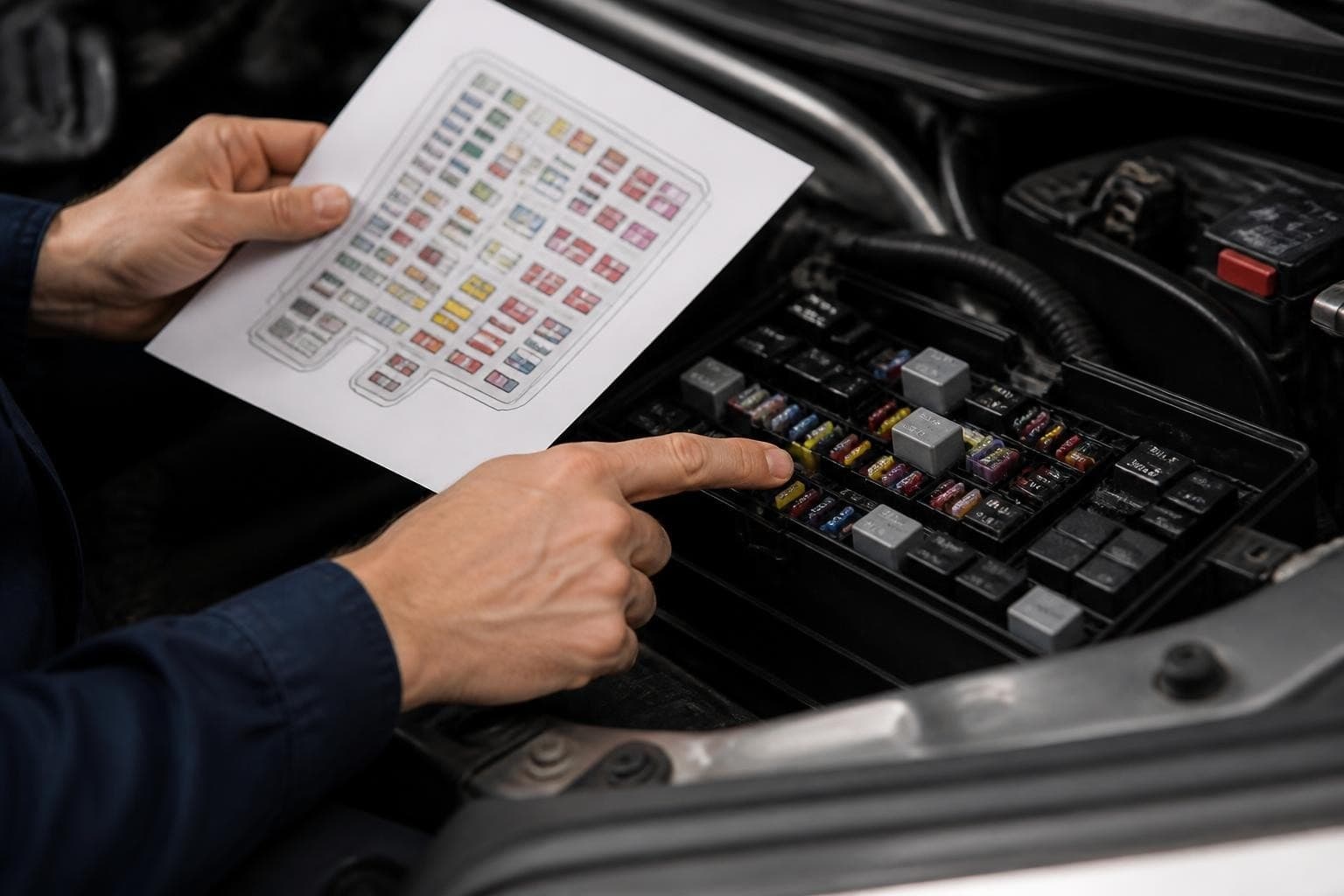
Most car fuse diagrams follow a pretty standard format. You'll see a grid or schematic showing numbered positions, with each position labeled for its circuit. The amperage rating tells you how much current can flow before the fuse blows.
Key elements you'll find:
- Fuse position numbers (like F12 or 23)
- Circuit descriptions (Power Windows, Radio, Fuel Pump)
- Amperage ratings (5A, 10A, 15A, 20A, etc.)
- Sometimes color codes for quick identification
The diagram might be printed on the inside of your fuse box cover, in your owner's manual, or available through resources like comprehensive fuse box diagram databases that catalog layouts for thousands of vehicle models.

Different Types of Fuse Boxes and Their Diagrams
Modern vehicles typically have at least two fuse boxes, and some have three or more. Each one needs its own diagram because they serve different electrical zones.
Under-Hood Fuse Box
This is your high-power zone. It handles heavy-duty circuits like the engine control module, cooling fans, ABS system, and starter motor. The fuses here are usually larger blade-type fuses or cartridge fuses because they're dealing with higher amperage.
Interior Fuse Panel
Usually located under the dashboard on the driver's side, this box handles comfort and convenience features. We're talking power windows, radio, interior lights, and accessories. The different types of automotive fuses you'll find here are typically mini or low-profile mini blade fuses.
Fuse Box Location | Typical Circuits | Common Fuse Types |
|---|---|---|
Under Hood | Engine Control, Cooling Fans, ABS | Standard Blade, Cartridge |
Interior Panel | Radio, Windows, Lights | Mini Blade, Low-Profile |
Trunk/Rear | Trailer Connection, Rear Accessories | Varies by Vehicle |
Finding the Right Diagram for Your Vehicle
Here's where things get interesting for custom builds. If you're working on a stock vehicle, your owner's manual is the first stop. But what if you're building something unique?
For factory applications, sites like verified technical diagrams and specific model fuse layouts can be lifesavers. They've done the work of compiling accurate, model-specific information.
Finding your diagram:
- Check your owner's manual first
- Look inside the fuse box cover
- Search online databases by year, make, and model
- Consult factory service manuals for detailed schematics
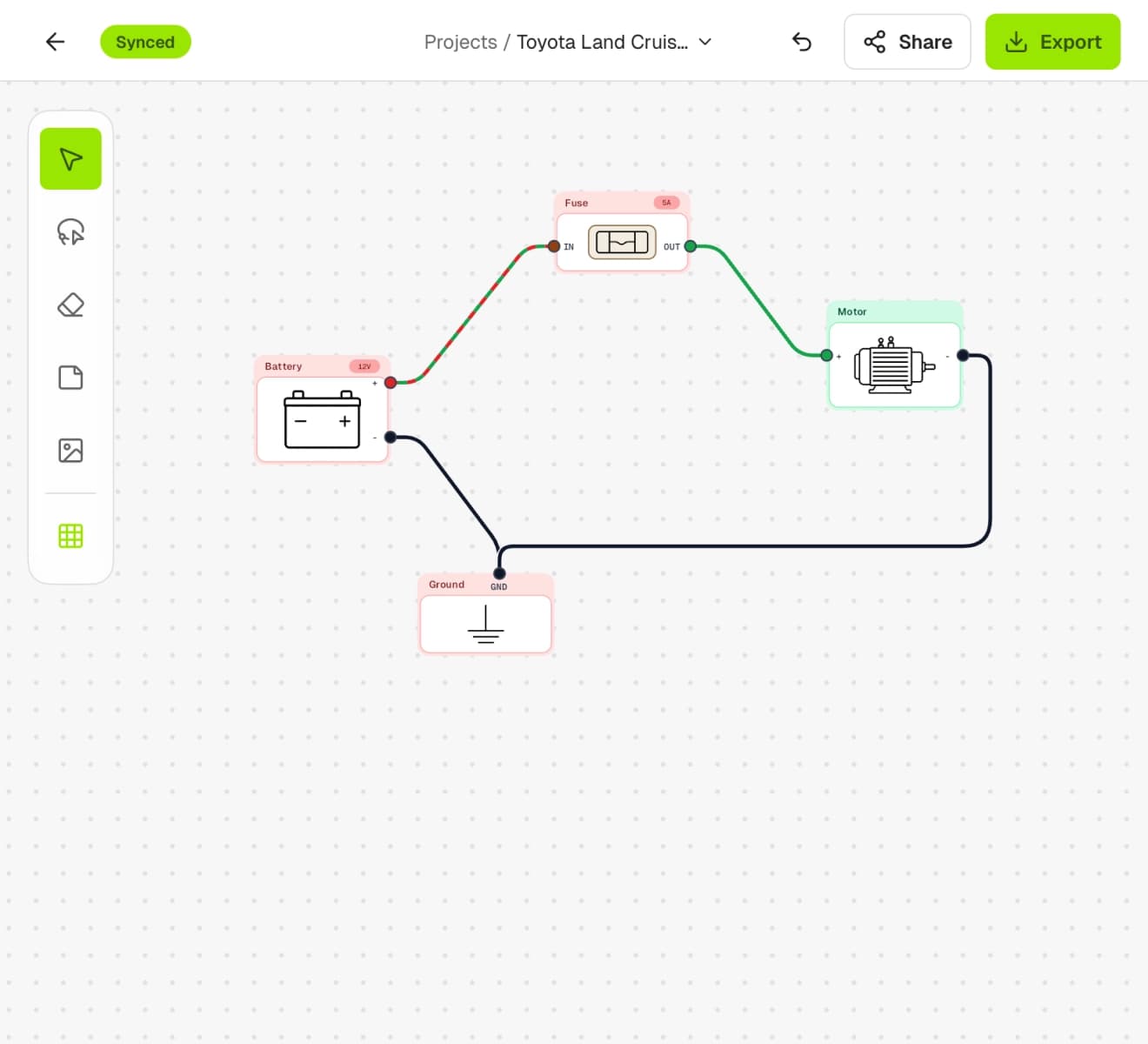
For project cars with custom wiring, you'll need to create your own documentation. That's where having a comprehensive library of automotive components becomes essential for designing and documenting your electrical system properly.
Creating Custom Fuse Diagrams for Project Cars
If you're modifying or building a project car, relying on the factory car fuse diagrams won't cut it. You need to document your custom electrical work, and that means creating your own fuse protection scheme.
Planning Your Circuit Protection
Start by listing every electrical component you're installing. Group them by function and determine the appropriate fuse size for each circuit. An electric fan might need a 20A fuse, while LED lights might only need 5A.

Think about future troubleshooting too. When you're diagnosing an issue six months from now, you'll thank yourself for clear labeling. Use descriptive names like "Fuel Pump Primary" instead of just "FP1."
Documentation Best Practices
Professional builders know that documentation is just as important as the build itself. Your custom car fuse diagrams should be clear enough that someone else could work on your car without you explaining everything.
- Label everything with both fuse position and circuit function
- Include amperage ratings for each circuit
- Note wire colors that connect to each fuse
- Document modifications as you make them
- Keep digital backups of all diagrams
Modern tools make this so much easier than it used to be. Instead of hand-drawing schematics or wrestling with generic CAD software, you can use specialized platforms built specifically for automotive wiring documentation. The iPad app for wiring diagrams approach means you can update your diagrams right in the garage.
Troubleshooting with Fuse Diagrams
When something stops working, car fuse diagrams are your roadmap to a solution. But here's the thing: a blown fuse is a symptom, not the disease. Finding the blown fuse is step one. Finding out why it blew is step two.
The Systematic Approach
Check the obvious stuff first:
- Verify the fuse is actually blown using a test light or multimeter
- Inspect the circuit for visible damage
- Look for recent modifications or additions
- Check for water intrusion in fuse boxes
If a fuse keeps blowing repeatedly, you've got a short circuit somewhere. This is where having accurate diagrams showing wire routing becomes critical. You need to trace the entire circuit from the fuse to the component and back.
Problem | Likely Cause | Next Step |
|---|---|---|
Fuse blows immediately | Hard short to ground | Disconnect component, test circuit |
Fuse blows under load | Worn wiring or bad component | Inspect connections, test component draw |
Intermittent blowing | Loose connection or chafed wire | Check for movement-related failures |
Advanced Diagnostic Techniques
For complex electrical issues, you'll want to reference comprehensive resources like vehicle electrical system diagrams to understand how multiple circuits interact. Sometimes what looks like a simple blown fuse is actually a symptom of a larger problem elsewhere in the system.
The research behind electrical fuse operation principles explains exactly how and why fuses fail, which can help you understand whether you're dealing with a momentary overload or a sustained problem.
Understanding car fuse diagrams is essential whether you're maintaining a daily driver or building a custom project car. The key is having accurate, well-organized documentation that you can reference when issues arise. When you're ready to create professional wiring diagrams for your build, X/D Loom gives you the tools to design, document, and share your electrical system with the same clarity that makes factory diagrams so useful.